



The global RegTech market was projected to reach $29.2 billion in 2026, according to Research and Markets. As businesses work to keep up with regulatory requirements, many are looking for ways to spend less time on manual compliance tasks.
RegTech uses software to help businesses handle tasks such as checking customer identities, spotting possible fraud, and keeping compliance records. These tools can take some of the work out of routine checks, but businesses still need to understand and follow the rules that apply to them.
In this guide, we’ll explain what RegTech is, why businesses use it, and how it works. We’ll also look at the benefits and challenges, along with a few examples of how businesses use it in practice.
What Is RegTech?
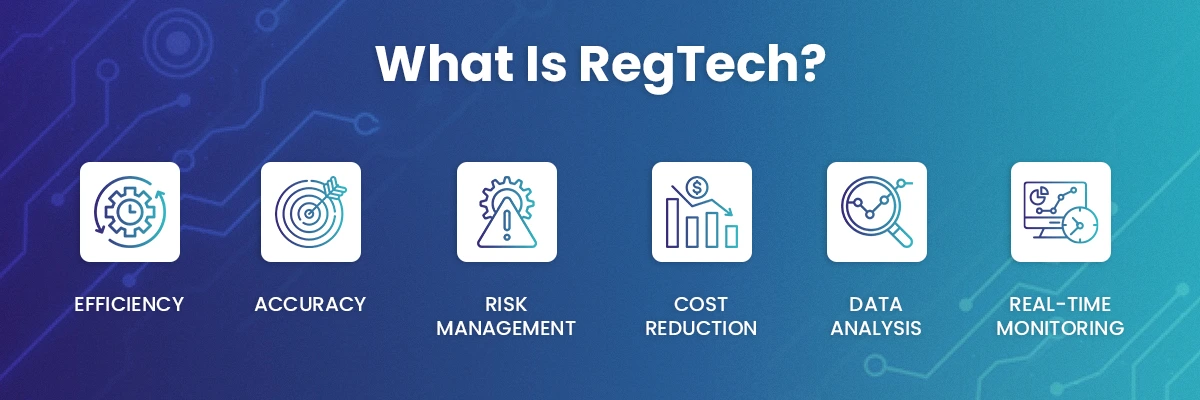
RegTech stands for regulatory technology. It refers to software and other tools that help businesses manage regulatory requirements. These tools can support tasks such as verifying customer identities, screening transactions, tracking regulatory changes, and preparing reports.
Not every RegTech tool does the same thing. Some focus on identity verification, while others help businesses manage financial crime risks, prepare regulatory reports, or handle data privacy requirements. The right fit depends on what a business needs help with.
Why Is RegTech Important Today?
Businesses need to follow regulations, protect customer data, and watch out for fraud. Handling all these responsibilities manually can take time, especially when teams have a lot of customers or records to manage. RegTech can take some of that work off their hands by automating certain tasks and helping them keep information organized.
Increasing Regulatory Complexity
Regulatory requirements can be difficult to manage from the start of a business. Things can get even more complicated when a business operates in multiple locations, since the rules aren’t always the same everywhere.
Growing Risks of Identity Fraud and Financial Crime
Online businesses may encounter fake IDs, stolen personal information, and other forms of fraud. RegTech tools can help businesses check customer details and flag activity that deserves a closer look. For example, digital identity verification helps businesses check if a customer’s identity details are genuine.
Demand for Faster Customer Onboarding
Customers want to sign up for services without long waits or too much paperwork. When every identity check has to be handled manually, getting customers through the process can take longer than expected. RegTech tools can check customer details faster and send cases that need a closer look to staff for review.
Need for Consistent Compliance Processes
When employees handle the same task in different ways, it’s easier for an important step to get missed. RegTech makes it easier for companies to have a standardized procedure when carrying out activities like verifying the identity of customers, analyzing risks, and maintaining records.
Importance of Accurate Records and Audit Readiness
Businesses may need to show which checks they’ve completed and what they did when something raised a concern. RegTech tools can help store this information and make it easier to find when needed. These records can help during an audit or a review of the business’s compliance process.
Adapting to New Regulatory Requirements
Rules change, and businesses need to make sure their processes keep up. That can mean reviewing existing procedures, updating checks, or making changes to the way information is handled. RegTech tools can help adjust checks and workflows, but businesses must still review the rules that apply to them and make sure their processes meet those requirements.
Before choosing a RegTech tool, think about which compliance tasks are taking up the most time or causing the most headaches. Maybe it’s checking customer IDs, tracking down records, or reviewing suspicious activity. Once you know where the biggest challenges are, it’s easier to narrow down the tools that might help.
Learn how digital identity verification can help with customer checks.
Key Benefits of RegTech Adoption
RegTech can take some of the repetitive work out of managing compliance. Depending on the tools a business uses, it may also help teams spot potential problems sooner and keep better track of their records.
1. Faster Customer Onboarding
Checking customer identities manually can slow down the signup process. RegTech tools can handle parts of these checks automatically, helping businesses review customer information without having to do every step by hand.
2. Lower Compliance Costs
Managing compliance takes time and resources. RegTech can reduce some of the repetitive work, such as entering information, searching for records, and preparing reports. That can free up employees to focus on tasks that need more attention, although the overall savings will depend on the tool and how it’s used.
3. Improved Accuracy
Manual processes leave room for mistakes, whether that’s a missing detail, an incorrect entry, or a check that gets overlooked. RegTech tools can help reduce these errors by following consistent procedures and processing information in a more standardized way. Employees still need to review unclear results and correct any mistakes.
4. Stronger Fraud Prevention
Fake IDs, stolen information, and unusual transactions can put a business at risk. RegTech tools can help check customer identities and flag activity that looks suspicious. This gives teams a chance to investigate potential issues, though these tools can’t catch every instance of fraud.
5. Real-Time Risk Management
Some RegTech tools monitor activity as it happens and alert teams when something looks out of the ordinary. That can help businesses look into potential problems sooner rather than waiting for a later report. Not every solution offers real-time monitoring, so it’s worth checking which features are included.
6. Better Audit Readiness
Getting ready for an audit can be stressful when records are scattered across different systems. RegTech tools can help keep compliance information organized, making it easier to find the records a business needs when it’s time for a review.
7. Scalable Compliance
As a business grows, it may need to manage more customers, transactions, and compliance requirements. RegTech tools can help it handle a larger workload by automating parts of the process. Businesses can also look for solutions that can grow with them as their needs change.

How Does RegTech Work?
RegTech tools can work in different ways, depending on what a business needs them to do. For example, a tool used for identity verification will follow a different process from one that monitors financial transactions.
Here’s a general look at how these tools may work:
1. Data Collection
This process begins with the collection of data that will allow for conducting the necessary compliance testing. These can be customer data, documentation for identification, transaction data, or company-related data. Tools such as identity scan solutions can help capture information from identity documents and make it easier to use for verification.
2. Identity Verification
RegTech solutions verify whether the personal information provided by the customer is authentic. They may analyze the information provided in the identity document, match details, and do other verifications to prove a person’s identity. Such verifications allow businesses to detect any fake or tampered documents before giving access to a service.
3. Risk Scoring
Some RegTech solutions assess customer information or transaction details to estimate the level of risk. For example, a tool may flag information that matches a risk list or activity that falls outside normal patterns. These results help compliance teams decide which cases need closer review. KYC compliance software can support customer checks that form part of this process.
4. Monitoring
RegTech systems track transactions, customer activity, or any changes in information, depending on their capabilities. It enables businesses to detect any abnormal activities or changes that require attention. While some systems conduct monitoring activities on a continuous basis, others perform checks on schedule.

5. Alerts and Investigations
When a tool finds something that needs attention, it may send an alert to the relevant team. Staff can review the details, gather more information, and decide what action to take. An alert does not automatically mean that fraud or a compliance breach has occurred. Tools that support biometric authentication can also help verify a person’s identity when additional checks are needed.
6. Reporting and Audit Trails
RegTech tools can help businesses prepare compliance reports and keep records of checks, alerts, and actions taken. These records make it easier for teams to review past decisions and provide information during an audit. The reports and records available depend on the software being used.
Common RegTech Use Cases Across Industries
RegTech is used in sectors in which companies need identification, risk management, or regulatory compliance.
Listed below are some sectors that make heavy use of RegTech for identification purposes:
1. Banking and Financial Services
Banks and financial organizations need to verify the identity of their customers, monitor their transactions, and take action to stop financial crimes. RegTech helps them perform KYC, AML, and regulatory compliance. It can also help the team identify suspicious transactions that may need further investigation.
2. Fintech Companies and Digital Payments
Fintech firms and digital payment providers usually process sign-ups and transactions through their online platforms. They may utilize the RegTech technology in verifying the identity of customers, screening transactions, and identifying possible fraudulent transactions.

3. Ecommerce and Digital Businesses
Online businesses may need to verify customers, protect accounts, and meet rules that apply to their products or services. RegTech tools can support identity checks, fraud screening, and the management of customer records.
For businesses selling age-restricted products, age verification can also help check whether customers meet the legal age requirement before a purchase is completed.
4. Regulated Retail and Age-Restricted Industries
Retailers selling products such as tobacco, vapes, and alcohol have to follow age-related sales rules. RegTech tools can help check customer IDs and confirm whether a customer meets the required age.
For example, age verification software can help online businesses check a customer’s age before allowing access to age-restricted products or services. The checks required depend on the product and the laws that apply in each location.
Five Key RegTech Solutions: Streamlining Compliance and Managing Risk
These solutions span a wide range of applications, providing businesses with tools to streamline regulatory compliance and enhance risk management.
Here are five examples of RegTech solutions:
1. KYC and AML Solutions
RegTech companies offer Know Your Customer (KYC) and Anti-Money Laundering (AML) solutions that use advanced algorithms, machine learning, and data analytics to automate the verification of customer identities and detect potential money laundering activities. These solutions enable financial institutions to comply with regulatory requirements more efficiently.
2. Regulatory Reporting Platforms
RegTech providers offer regulatory reporting platforms that help businesses in highly regulated industries, such as finance, generate and submit accurate reports to regulatory authorities. These platforms automate data collection and formatting, reducing the risk of reporting errors.
3. Trade Surveillance and Market Monitoring Tools
In financial markets, RegTech solutions such as trade surveillance and market monitoring tools rely on artificial intelligence and natural language processing to examine trading activities, perform enhanced due diligence (EDD), and identify potential market abuse, fraud, and violations of market regulations. These tools help financial institutions maintain a fair and transparent trading environment.
4. Data Privacy and Consent Management Solutions
RegTech solutions for data privacy and consent management assist businesses in adhering to regulations like General Data Protection Regulation (GDPR) and the California Consumer Privacy Act (CCPA). They offer tools for data mapping, tracking consent, and handling data subject access requests (DSARs). These tools assist organizations in managing and safeguarding personal data while complying with privacy laws.
5. Cybersecurity and Threat Detection Tools
RegTech companies provide cybersecurity solutions that use AI and machine learning to monitor network traffic. They can spot anomalies and identify potential security threats in real-time. These tools help businesses bolster their cybersecurity defenses and adhere to data protection and cybersecurity regulations.
The Future of RegTech
As the digital landscape continues to evolve, so too will RegTech.
The future holds exciting developments and innovations, including the following:
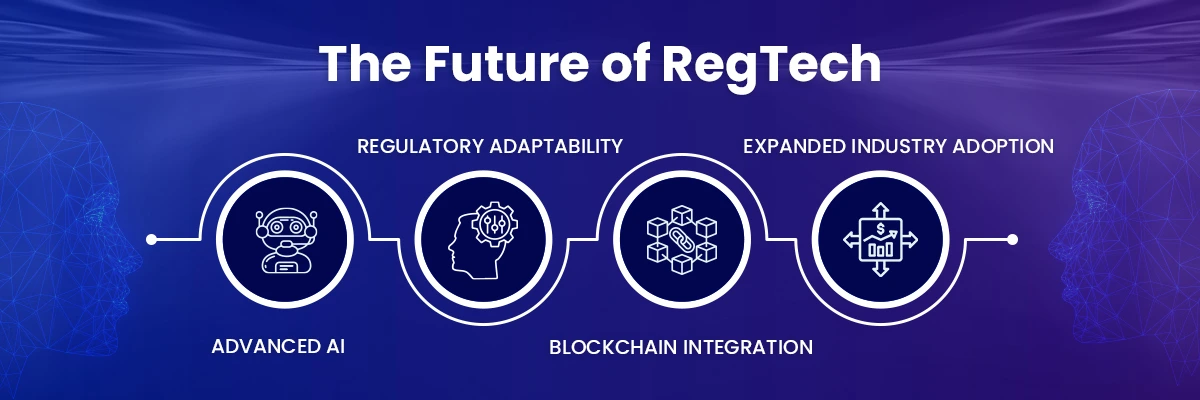
- Advanced AI: RegTech will continue to harness the power of artificial intelligence (AI) for more sophisticated applications. This means even more advanced analytics, predictive capabilities, and automation. AI will become increasingly adept at sifting through vast datasets, identifying patterns, and providing real-time insights for more effective risk management and compliance.
- Regulatory Adaptability: One of the defining features of RegTech is its adaptability to changing regulatory environments. As new rules and compliance requirements emerge, RegTech solutions will evolve to meet these challenges. This adaptability ensures that businesses can stay in compliance even as regulations shift and become more complex.
- Blockchain Integration: Blockchain offers immutable and transparent record-keeping, which is highly valuable in compliance and regulatory contexts. It ensures the integrity and security of records and transactions, making it an ideal technology for enhancing trust and transparency.
- Expanded Industry Adoption: While RegTech has made significant inroads in the finance sector, it is likely to see broader adoption across various industries. More businesses beyond finance will recognize the potential of RegTech to enhance compliance and risk management. Industries such as healthcare, data privacy, and manufacturing are expected to embrace RegTech solutions to streamline their regulatory processes and ensure adherence to evolving standards.
Conclusion
RegTech isn’t just a buzzword; it’s a game-changer in how we handle compliance and risk management. It makes processes smoother, improves risk management, and saves money. As businesses grapple with complex regulations, it offers a lifeline, fostering efficiency and proactivity. Regtech solutions, spanning identity verification to trade surveillance, and reshape industries.
While challenges persist, the future of RegTech is bright, with more advanced solutions on the horizon. To navigate the evolving regulatory landscape, embrace RegTech as a strategic ally, propelling compliance and success in the digital age. With RegTech, you’re not merely following the rules; you’re leading the way.
Looking to simplify identity checks and compliance workflows?
See how FTx Identity can help your business verify customer identities and build
verification into your existing processes.